Reduce, Reuse, Reuse Again
Sometimes when things are normalized as routine, they do not seem extraordinary enough to share. This post is prompted by several reactions of awe and surprise over the years from farm visitors when they see that our residential waste and recycle bins are the same as every other household’s. We are a family of five with a home-based business, and our property is 1.5 acres. Nothing leaves here as yard waste and we just skipped trash day again.
There are many areas for improvement, but first we will dive into what is going well. Each step is small but worthwhile. Practicing sustainability goes beyond our garden spaces. Reducing waste, creatively reusing what we have, and recycling are routine in our home. These are a few of the things that have come up this winter:
Looking at things through a filter: use it, reuse it, and then reuse it again. Let’s look at the lifespan of a sheet of product labels for an example. Product labels are needed for running our business. Labels are printed and peeled off for product packaging, and empty label sheets are stacked so they can be used again to print shipping labels, coloring pages for our kids, signage for our market table set-ups, writing to-do lists, writing notes to customers or family members, etc. After a sheet is all used up, they go in the recycle bin. Oftentimes, there is value in by-products or other ‘waste.’
Make it convenient. A regular sighting in our kitchen and workroom is a box of recyclables, and in our garage there is a large stack of cardboard boxes that are broken down flat. We have set ourselves up for routine. Many supplies we need for both our business as well as for our work at the local little league come in large cardboard boxes; we are able to break down many large boxes to use as sheet mulch in the garden. Items we cannot reuse (or that have already been reused) go to the recycle bin. If you don’t have access to residential recycling, you might be able to creatively coordinate giving your recyclables a second life: map out convenient drop-off sites, donate recyclables to a teacher/art instructor for students to use, offer them up on your local Buy Nothing or Zero Waste Facebook group. There is likely a community near that will appreciate your offer. A recent visit to a local recycling factory was both mind-blowing and inspiring. At this particular factory, they showed us the plastic lumber made from all of the tidbits that are recycled in orange bags.
“Mom, where is the chicken bucket?” We are fortunate to have space to keep chickens and build compost piles each year. There is very little food waste here, and we have created a routine of setting aside food scraps for our animals. This reduced waste mindset can be applied in any home kitchen: set a goal of making ‘just enough’, eat up or recreate with leftovers, make soup stock with veggie peels, freeze what you won’t eat and enjoy it later, donate excess and share with others. For composting: learn to keep your own home garden compost pile, use a composting barrel/dome, take food waste to a local food hub that composts, join a compost club, or become a member at a community garden that composts.
Reflect and hold yourself accountable one step at a time. A goal for this year is to learn to make castile soap which is what we use for our refillable foaming soap dispensers. It’s something we buy now, but we know we can do it ourselves and are ready to make the switch. Each step is small but we think the change is worthwhile.
In the garden: many tools were purchased second-hand and the same equipment is reused year after year. We don’t mow until we feel like we ‘have to’, and it is minimal as we have successfully planted out about 1 acre of our 1.5 acre property. Additionally, roughly 3/4 of our growing space is filled with perennials that are not irrigated after the initial watering in, and there is no use of pesticides/herbicides in any form. All of these practices reduce waste and use resources wisely.
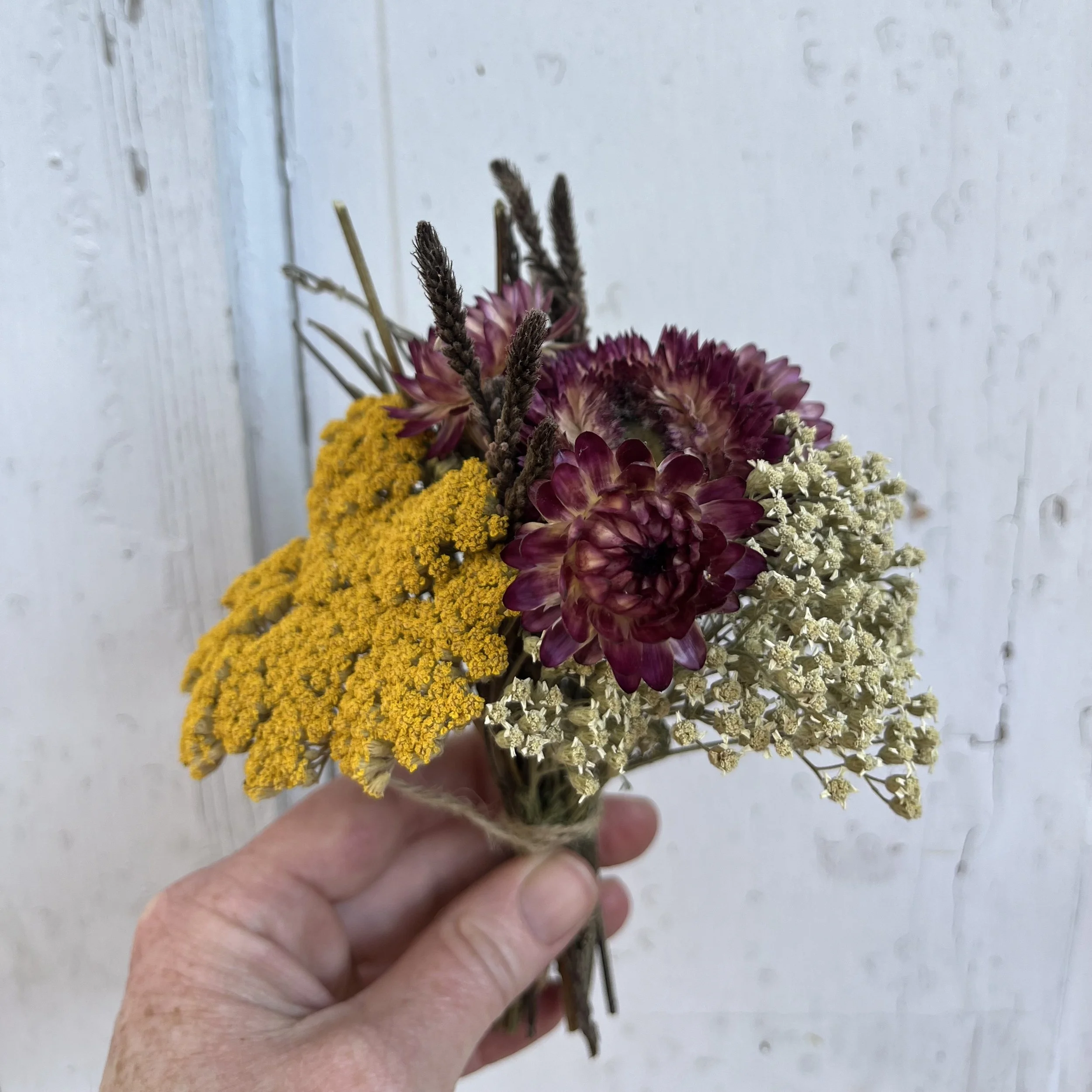
In the product workshop: packaging is reusable, recyclable, and/or made of recycled materials; some products are even offered as zero waste. Food waste after canning is fed to the chickens. Dried herb stems from processing herbs and flowers are broken down and incorporated into that year’s dried potpourri batches and mini dried flower bouquets (photo below). To ship orders, we use 100% repurposed packing supplies that arrive to us with orders of mason jars, spice jars, etc.